
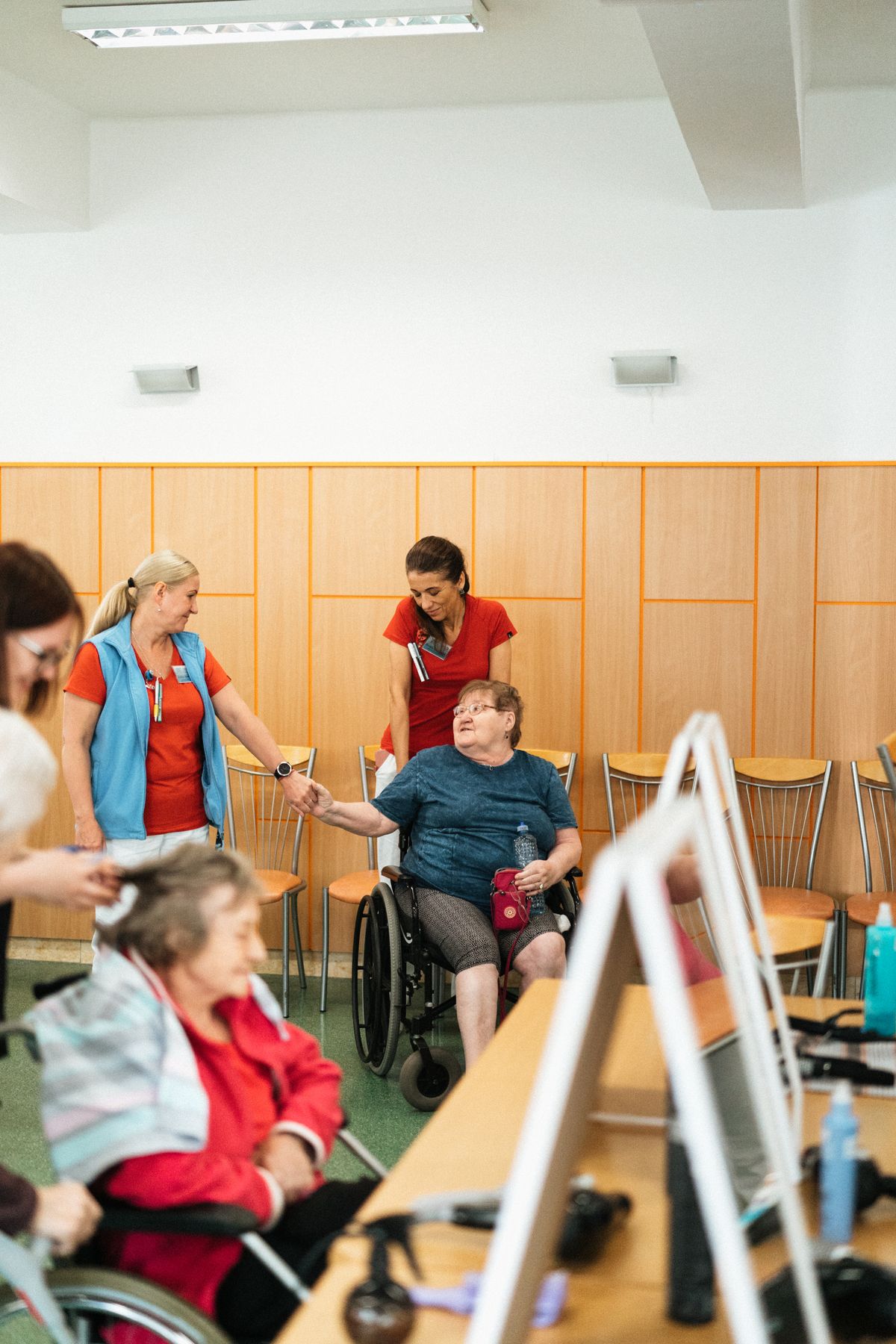
Paralysis from a stroke, spinal cord injury or nerve condition changes daily life for the whole family, not just the patient. At-home paralysis care means a trained nurse or attendant handles the physical demands — repositioning, hygiene, feeding, mobility support — while you focus on being family, not a full-time caregiver.
Because paralysis patients are more prone to complications like bedsores, urinary infections and muscle stiffness, our staff are trained specifically in the routines that prevent them: scheduled repositioning, skin checks, and basic physiotherapy exercises between our physiotherapist's visits. Care includes turning and repositioning, catheter and hygiene care, assisted feeding, and passive range-of-motion exercises.
Why choose our paralysis patient care
We coordinate with your neurologist or physiotherapist so home care stays aligned with the treatment plan.

Staff Trained In Paralysis-Specific Care
Trained in the routines that prevent bedsores, urinary infections and muscle stiffness — repositioning, skin checks and physiotherapy exercises.

Coordinated With Your Neurologist Or Physiotherapist
Home care stays aligned with your treatment plan through direct coordination with your medical team.
How paralysis care gets started
Paralysis care is often round-the-clock, so we typically staff it in shifts to keep caregivers alert and effective.
01
Share The Patient's Condition
Level of paralysis and current routine
02
We Recommend A Staffing Plan
Shift-based or round-the-clock, quoted same day
03
Structured Daily Care Begins
Repositioning, hygiene, feeding, mobility
Who paralysis patient care is for
Best suited for patients paralyzed by a stroke, spinal cord injury or nerve condition who need consistent, complication-aware daily care.

- Stroke & Spinal Cord Injury Patients
- Families Needing Round-the-Clock Support
- Patients At Risk Of Bedsores & Infections
Frequently Asked Questions
Turning and repositioning to prevent pressure sores, catheter and hygiene care, assisted feeding, passive range-of-motion exercises, and monitoring for early signs of infection or skin breakdown.
Yes, paralysis care is often round-the-clock, and we typically staff it in shifts to keep caregivers alert and effective.
Yes, we coordinate with your treatment team so home care stays aligned with the medical plan.
Tell us the patient's level of paralysis and current routine, and we'll recommend a staffing plan and quote a rate the same day.
Call or WhatsApp us with the patient's details and we'll confirm a staffing plan and rate the same day.